Loading course…
Developments in Europe from c. 1200 to c. 1450
Created by Shaunak Ghosh
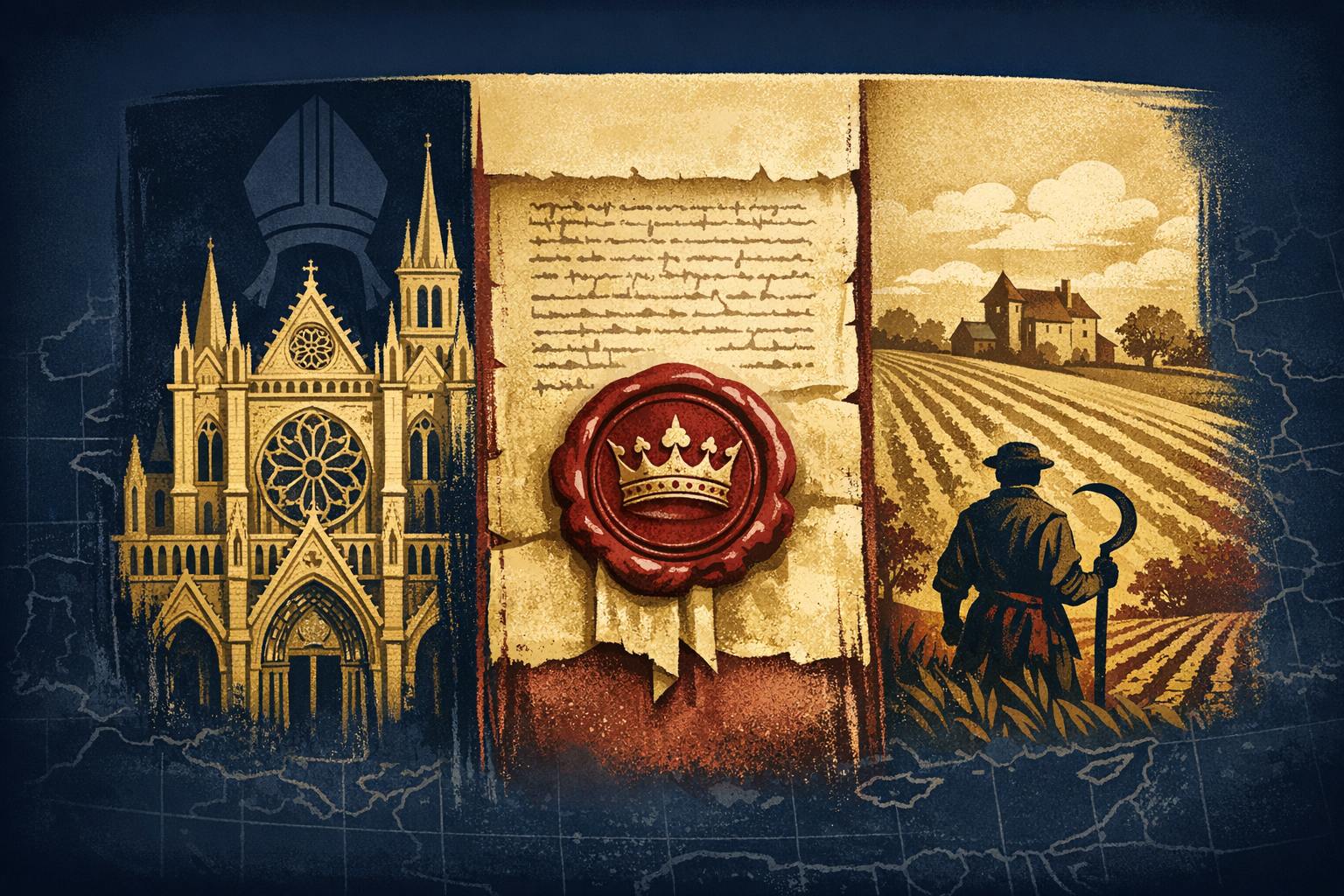
Analyze Europe from c. 1200–1450 through the AP World lens: how religion shaped society, why politics stayed decentralized, and how agriculture and labor systems structured everyday life. You’ll build causal explanations using concrete institutions (Church hierarchy, charters, feudal land tenure) and a major turning point (the Black Death).
Requirements
- Basic map awareness of medieval Europe (Iberia, France/England, Italy, Byzantine/Eastern Mediterranean)
- Basic understanding of what a monarchy, Church, and social hierarchy are
- Comfort making cause-and-effect claims (because → therefore)
What you'll learn
- Explain how Christianity’s institutional structure shaped European society and political legitimacy (c. 1200–1450).
- Explain how Judaism persisted as a communal identity while Christian-majority restrictions shaped legal status and economic roles, including credit provision.
- Identify Islam’s presence in Europe (Iberia) and assess how conquest and frontier zones produced mixed outcomes of interfaith contact.
Learning path
8 modules • Each builds on the previous one
1
Europe c. 1200–1450: context and networks
Map the key regions and interaction zones (Latin Christendom, Iberia, Mediterranean, Baltic) and explain how expanding trade, crusading, and intellectual exchange shaped diffusion in Europe.
1 video7 min
2
Christianity shaping European society 1200–1450
Explain how core Christian beliefs and Church practices (sacraments, canon law, monastic/mendicant orders) shaped social norms, education, charity, and political legitimacy across Latin Christendom.
1 video5 min
3
Judaism and Jewish communities in Europe
Explain how Jewish religious identity and communal institutions shaped Jewish life, and how Christian-majority societies structured legal status, segregation, persecution, and economic roles for Jews.
1 video11 min
4
Islam in Europe and cultural diffusion
Explain how Islamic rule and Muslim communities in Europe (especially Iberia and parts of the Mediterranean) shaped European society through governance models, interfaith relations, trade, and knowledge transmission.
1 video6 min
5
Causes of political fragmentation in Europe
Explain why Europe remained politically fragmented from 1200–1450 by linking material conditions (land-based wealth), geography, inheritance customs, limited bureaucracies/taxation, and competing authorities (nobles, Church, towns).
1 video5 min
6
Decentralized monarchies: kings, nobles, estates
Explain how medieval monarchies functioned with shared and negotiated authority—through vassals, charters, representative bodies (Parliament, Estates General, Cortes), and Church legitimacy—rather than centralized bureaucratic rule.
1 video6 min
7
Feudalism and manorialism: key differences
Distinguish feudalism (political-military relationships among elites) from manorialism (economic-labor organization on estates) and explain how both reinforced decentralization and local control.
1 video4 min
8
Agriculture, labor systems, and serfdom
Explain how Europe’s agricultural base shaped social organization through free and coerced labor (serfdom), and how agricultural change and crises (notably the Black Death) affected social relations and obligations.
1 video5 min
Start Learning
Begin your learning journey
Modules8
Duration44 min
Science-backed learning
In-video quizzes and scaffolded content to maximize retention.
Key concepts
Agricultural Growth And European Expansion (Pre-1200 Foundations)Church Reform And The Catholic Church As A Transregional InstitutionChristian Institutional Authority (Bishops To Pope)